
Franchising runs on an asymmetry: the franchisor writes the agreement, controls the system, and usually has more lawyers. California answers that asymmetry with two of the country's strongest franchise statutes—one governing what must be disclosed before you buy, the other governing how the relat...
Blog
Enforcing a Settlement Agreement in California: How CCP § 664.6 Turns a Deal Into a Judgment
The overwhelming majority of California business cases end in settlement—and a surprising number of those settlements spawn a second dispute when one side does not perform. Whether the deal holds often depends on choices made in the hour the agreement is papered: whose signatures appear on it, wh...
Piercing the Corporate Veil in California: When Business Owners Become Personally Liable
The promise of the corporate form is simple: the company's debts belong to the company. Most of the time California courts honor that separation. But when owners treat the entity as an extension of themselves—draining accounts, ignoring capitalization, shuffling assets between shells—courts will ...
Can Your Business Be Sued for What Your AI Does? California's AB 316 and AI Liability in 2026
California's AB 316 (Civil Code § 1714.46) ends the “the AI did it” defense as of January 1, 2026. Here's how the law expands business liability for AI systems—and the concrete steps owners can take to reduce risk.
Two-thirds of workers don't always check what AI tells them. Half think they'd be responsible for the fallout.
Earlier this year, The New York Times hired Oumi, an AI testing company, to answer a basic question: How often are Google's AI Overviews right? The AI overviews are the summaries that sit on top of the search results that billions of people see every day. Oumi measured Google's Gemini 3 model as...
Cognitive Surrender: 65% of Workers Don't Always Check AI Answers. Half Know They'd Be the Ones Paying for It.
A Kolmogorov Law survey of 500 U.S. workers who use AI on the job finds 65% don't always verify AI answers before acting on them, 42% have knowingly accepted a doubtful answer, and 30% have already been burned. Half know the liability is theirs.
California's Section 998 Offer to Compromise: The Cost-Shifting Settlement Tool in Business Litigation
Most California business cases settle—but few settle on terms as favorable as they could, because many litigants never deploy the one settlement device the Legislature armed with real consequences. A statutory offer to compromise under Code of Civil Procedure section 998 is not just a settlement ...
California Invasion of Privacy Act (CIPA) Lawsuits: Why Your Website's Chat, Pixels, and Session Replay Are a Target
A wave of privacy litigation is washing over California businesses that never thought of themselves as "wiretappers": companies whose websites run chat widgets, session-replay tools, or advertising pixels. The vehicle is the California Invasion of Privacy Act (CIPA)—a 1967 eavesdropping statute n...
Motion for Judgment on the Pleadings in California (CCP § 438): Timing, Grounds, and Strategy
In California civil litigation, the demurrer gets the attention—but its post-answer sibling, the motion for judgment on the pleadings, often does the same work at a stage when the demurrer deadline is long gone. Used well, it can knock out a defective complaint or a sham answer on the pleadings a...
California AI Transparency Act (SB 942): What Businesses Need to Know Now That It Is Operative
California’s AI Transparency Act (Bus. & Prof. Code, §§ 22757–22757.6) became operative August 2, 2026. Here is who counts as a covered provider, the AI detection tool and manifest/latent disclosures the statute requires, the 96-hour license-revocation rule, the phased 2027 and 2028 obligations, and what businesses that merely license AI should put in their vendor contracts.
How to Dissolve an LLC in California: Step-by-Step Process, Taxes, and What Happens When Members Disagree
Closing a California LLC is a legal process, not just a decision. Done correctly, the company winds up its affairs, pays what it owes, files its final returns, and its members walk away clean. Done informally—the "just stop operating" approach—the LLC keeps accruing the $800 annual franchise tax,...
Nearly 2 in 5 US workers have put company information into personal AI accounts, and most don't know it can be illegal
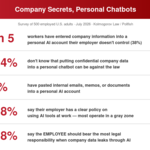
Nearly 2 in 5 US workers have put company information into personal AI accounts, and most don't know it can be illegal The confidential company document has a new address: someone's personal chatbot history. In a July 2026 survey of 500 employed U.S. adults commissioned by Kol...
AI Notetakers Have Sat In on 1 in 3 U.S. Workers' Meetings — But Only a Third Say They Were Asked First
The AI notetaker has quietly become a coworker. One in 3 employed Americans (33.4%) say an AI notetaker or transcription bot, tools like Otter.ai, Fireflies, Zoom AI Companion, or Microsoft Copilot, has been present in their work meetings, according to a July 2026 survey of 500 employed U.S. adul...
Fraud Claims in California Business Disputes: Elements, Damages, and the Economic Loss Rule
Not every broken promise is a breach of contract—some are fraud, and the difference is worth real money. A fraud claim opens the door to tort damages, punitive damages, and personal liability for the individuals who lied, remedies a contract claim cannot reach. It also carries strict pleading req...
What a Business Dispute Lawyer Does—and When California Business Owners Should Hire One
Most business owners search for a business dispute lawyer at the worst possible moment: a partner has locked them out, a customer refuses to pay, a competitor has poached their team, or a summons has just been served. In that moment the questions are practical, not academic—what does this lawyer ...
Statutes of Limitations for California Business Lawsuits: Every Deadline That Matters in 2026
In California business litigation, the statute of limitations is often outcome-determinative before anyone argues the merits. A claim worth seven figures is worth nothing the day after the limitations period expires, and the defense can be raised on demurrer or summary judgment with little sympat...
California's New Algorithmic Pricing Law (AB 325): What Business Owners Must Know in 2026
California's AB 325 (effective January 1, 2026) restricts “common pricing algorithms,” bans coercing others to follow algorithm-set prices, and makes Cartwright Act antitrust suits far easier to file. What business owners using pricing software need to know.
When a Customer Won't Pay: How California Business Owners Collect on Unpaid Invoices and Breached Contracts
The work is done and the invoice is overdue. A California business owner's practical guide to collecting on unpaid invoices and breached contracts—from demand letters and 10% interest to prejudgment attachment and enforcing a judgment for ten years.
Stay-or-Pay Agreements Are Now Illegal in California: What B&P § 16608 Means for Employers in 2026
Effective January 1, 2026, California's new B&P Code § 16608 (AB 692) bans most “stay-or-pay” and training-repayment (TRAP) clauses and creates a $5,000-per-worker private right of action. What employers must change—and how to keep a lawful clawback.
AI Vendor Contracts in California: The Clauses Every Business Should Negotiate Before Deploying AI
Most businesses buy AI rather than build it—and the vendor contract decides who pays when the tool fails. Here are the clauses California businesses should negotiate before deploying AI.
The AI Layoff Defense: Why 87% of Americans Want a Human to Sign Off Before a Machine Cuts Their Job
In 2026, "artificial intelligence" became one of the most common reasons American companies gave for cutting jobs. It has not, however, become a reason most Americans take at face value. A new national survey of 500 U.S. adults, conducted in June 2026 by Kolmogorov Law through the Pollfish resear...
Tortious Interference in California: Suing a Competitor for Stealing Customers, Employees, or Contracts
When a competitor poaches a customer, employee, or contract, California recognizes two tort claims: interference with contract and interference with prospective economic advantage. This guide covers elements, defenses, damages, and CACI 2200-2204.
California Pre-Judgment Writ of Attachment: How to Freeze a Defendant's Assets Before Trial Under CCP § 484
When a debtor is dissipating assets, California's pre-judgment writ of attachment (CCP § 484 et seq.) lets creditors freeze property before trial. This guide explains eligibility, the probable-validity standard, undertaking requirements, and the application process.
California Unfair Competition Law (B&P § 17200): What Business Owners Need to Know About the UCL
California Business & Professions Code § 17200 (the UCL) is the broadest competition statute in the country. This guide explains the unlawful, unfair, and fraudulent prongs; the four-year statute; and what restitution and injunctive remedies are available.
California Penal Code § 502: Civil Remedies When an Employee or Competitor Hacks Your Business Systems
California's Comprehensive Computer Data Access and Fraud Act (Penal Code § 502) gives businesses civil remedies — compensatory damages, attorneys' fees, and injunctions — when an employee, ex-employee, or competitor accesses systems without permission.